Buy Bourdon Pressure Gauge Online – All SS 2.5″ Dial | High Accuracy & Durable
If you're looking to buy bourdon pressure gauge online for industrial, chemical, or process applications, choosing the right material and dial size is critical. The All Stainless Steel (All SS) Bourdon Pressure Gauge with a 2.5-inch dial is one of the most trusted instruments among engineers, procurement teams, and plant operators across India and globally.
Why the All SS Bourdon Pressure Gauge Stands Out
When comparing all SS vs brass pressure gauge options, stainless steel wins decisively in corrosive, high-humidity, and aggressive media environments. Brass gauges corrode over time when exposed to acidic gases, chemicals, or outdoor weather — stainless steel doesn't.The stainless steel pressure gauge benefits go far beyond corrosion resistance:
- Full 304/316 SS wetted parts ensure zero contamination
- Suitable for oxygen, hydraulic, steam, and chemical lines
- Higher mechanical strength under pressure spikes
- Longer service life reducing replacement cost and downtime
- Hygienic design compatible with food, pharma, and beverage plants
This makes the All SS Bourdon gauge not just a best bourdon pressure gauge choice it's a long-term investment.
Bourdon Pressure Gauge Specifications – 2.5 Inch Dial
Understanding bourdon pressure gauge specifications helps you make the right purchase decision. Here's what a standard All SS 2.5″ dial gauge offers:
Parameter | Details |
|---|---|
Dial Size | 2.5 inch (63 mm) |
Case Material | All Stainless Steel (SS304/SS316) |
Bourdon Tube | SS316 |
Movement | SS / AISI 304 |
Connection | Bottom / Back / Lower Connection |
Accuracy Class | ±1.6% or ±2.5% Full Scale |
Pressure Range | Vacuum to 700 bar (as per requirement) |
IP Protection | IP65 (Dust & Water Resistant) |
Mounting | Panel / Direct / Wall |
This gauge meets IS 3624, EN 837-1, and ASME B40.1 standards — critical for quality-sensitive procurement.
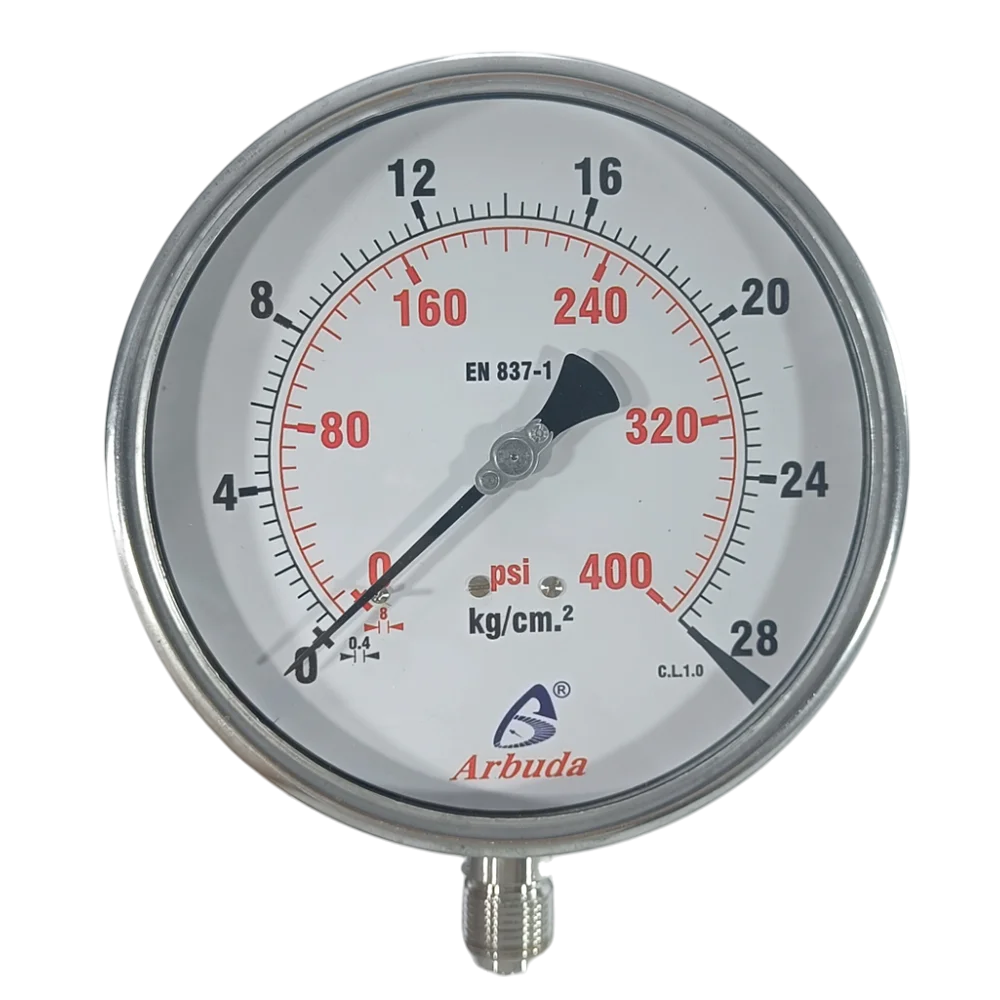
Bottom Connection Pressure Gauge – Why It Matters
If you're searching to bottom connection pressure gauge buy for panel mounting or pipe-end installation, this is your go-to configuration. The bottom connection (also called lower connection) allows:
- Direct vertical pipe mounting
- Clean panel-flush installation
- Reduced risk of mechanical stress on fittings
- Easier accessibility for reading in industrial setups
Bottom entry gauges are standard in hydraulic systems, compressor lines, boiler panels, and process pipelines — making them a frequent item in bulk industrial procurement.
Sourcing from a Trusted 2.5 Inch Dial Pressure Gauge Supplier
Not every supplier delivers what they promise on paper. When you decide to buy bourdon pressure gauge online, partnering with a verified and experienced 2.5 inch dial pressure gauge supplier makes all the difference between a smooth procurement experience and a costly operational failure.
A reliable supplier doesn't just ship a product they provide complete instrument accountability. This means you receive proper calibration certificates, material test reports (MTR), and dimensional inspection records with every batch. For industries like oil & gas, pharmaceuticals, and chemical processing, this documentation isn't optional it's mandatory for plant audits and regulatory compliance.
Beyond paperwork, a trusted bottom connection pressure gauge supplier offers flexibility. Whether you need a standard 0–10 bar range or a custom 0–400 bar configuration with a specific thread size, a capable supplier accommodates your exact technical requirement without compromising lead time.
Consistency matters just as much as quality. When you're procuring in bulk for a large plant installation or an OEM production line, every single unit must perform identically. Reputable suppliers maintain strict bourdon pressure gauge specifications across batches same accuracy class, same torque on fittings, same pointer calibration so your maintenance team never encounters surprise variations on the floor.
Competitive pressure gauge 2.5 inch dial price is another advantage of working directly with manufacturers or authorized distributors. You eliminate middlemen markups, get volume-based pricing, and often secure preferential delivery slots during peak demand seasons.
Whether you are a maintenance engineer handling routine replacements, a plant procurement officer managing annual contracts, or an OEM manufacturer integrating gauges into skid systems the right supplier becomes a long-term partner, not just a one-time vendor.
Transactional Buying Guide – What to Check Before You Order
Before you order stainless steel pressure gauge or purchase industrial pressure gauge online, rushing through the selection process is one of the most common and expensive mistakes buyers make. A wrong specification means returns, downtime, and safety risks. Use this checklist to get it right the first time.
1. Define Your Pressure Range CorrectlyNever select a gauge rated exactly at your system's maximum pressure. Always choose a range where your working pressure sits between 25% and 75% of the gauge's full-scale value. For example, if your line operates at 10 bar, a 0–16 bar or 0–25 bar All SS gauge is the right call not a 0–10 bar unit running at its limit.
2. Confirm Process Media CompatibilityThe stainless steel pressure gauge benefits only materialize when you match the right grade to your media. SS316 Bourdon tubes handle acids, chlorides, and aggressive chemicals. SS304 is sufficient for water, air, oil, and general-purpose services. Using the wrong grade accelerates tube fatigue and causes premature failure.
3. Verify Connection Thread and SizeMismatched threads are a leading cause of installation delays. Confirm whether your process line uses BSP (G thread), NPT, or metric threads before placing your order. For a 2.5 inch dial pressure gauge, the most common connections are G¼″ and G½″ bottom entry — but always cross-check with your piping layout.
4. Decide on Dry or Glycerine-FilledIf your application involves vibration, pulsation, or hydraulic hammer — such as compressors, pumps, or hydraulic power packs — always go for a glycerine-filled gauge. The fluid dampens pointer movement, protects the internal bourdon mechanism, and dramatically extends service life. Dry gauges are suitable for static, non-pulsating lines only.
5. Check Applicable CertificationsDepending on your industry and geography, you may require BIS certification (for Indian standards compliance), CE marking (for European markets), or ATEX certification (for explosive atmospheres). Confirm this with your supplier before ordering to avoid compliance issues during plant commissioning or third-party audits.
Getting these five parameters right before you buy premium bourdon pressure gauge ensures zero post-installation surprises and that's what separates informed industrial buyers from those stuck managing avoidable equipment failures.
FAQ – Bourdon Pressure Gauge
Q1. What is the difference between All SS and Brass Bourdon pressure gauges?
All SS gauges use stainless steel for both the external casing and internal wetted parts, making them ideal for corrosive media. Brass gauges suit general-purpose, non-corrosive applications and are more budget-friendly.
Q2. Can I use a 2.5-inch dial gauge for high-pressure applications?
Yes. The 2.5″ All SS Bourdon gauge is available in ranges up to 700 bar depending on the Bourdon tube design and wall thickness. Always specify your max operating pressure when ordering.
Q3. Is glycerine filling necessary?
For vibrating pipelines, compressors, or pulsating pumps yes. Glycerine dampens pointer oscillation, protects internal movement, and significantly extends gauge life.
Q4. What accuracy class should I choose?
Class 1.6 is standard for most industrial uses. Class 1.0 is preferred for precision processes. Class 2.5 is acceptable for general indication.
Q5. How do I get a competitive pressure gauge 2.5 inch dial price for bulk orders?
Contact a certified supplier directly with your technical specification sheet quantity, pressure range, connection, and certifications required. Bulk orders typically come with test certificates and reduced per-unit pricing.
Q6. Where can I buy bourdon pressure gauge online with fast delivery?
Look for ISO-certified instrument suppliers or verified B2B portals with product traceability, datasheet availability, and responsive technical support before placing your order.
